
What Are the Different Stages of Mine Life?

Overview of the Mine Life Cycle
When a person wants to achieve a goal, he follows a series of steps to meet the specific requirements of the goal.
For example, let's say for cooking: The first stage includes finding things to cook such as vegetables and cookware (from supermarkets). The second stage involves deciding the quantity needed and buying them. The third stage is preparing the vegetables (cutting, heating the pan). The final stage is actually cooking the items, which finishes your goal.
The first three stages are as important as the last, but the last stage holds prime importance as everything depends on its success.
A similar story runs in mining. The first stage is to inspect locations to find the type of minerals present — called prospecting. Once found, investigate the quantity, depth, and surroundings — known as exploration. To reach the deposit, prepare pathways (removing overburden, declines, shafts, crosscuts) — called development. The most important stage is exploitation (extraction of the mineral) using various methods. Mining has a fifth stage: reclamation, filling the area or making it useful again to avoid potholes and ensure sustainability.

Comprehensive diagram of mine life cycle stages
1. Prospecting

Prospecting activities
- Different methods to find potential mineral locations:
- Geological methods: Visual inspection of surface features.
- Geo-chemical methods: Indicator plants that grow abundantly over certain minerals help geologists guess deposits.
- Geophysical methods: Use gravitational, seismic, electrical, magnetic, electromagnetic, and radiometric surveys to detect minerals underground.
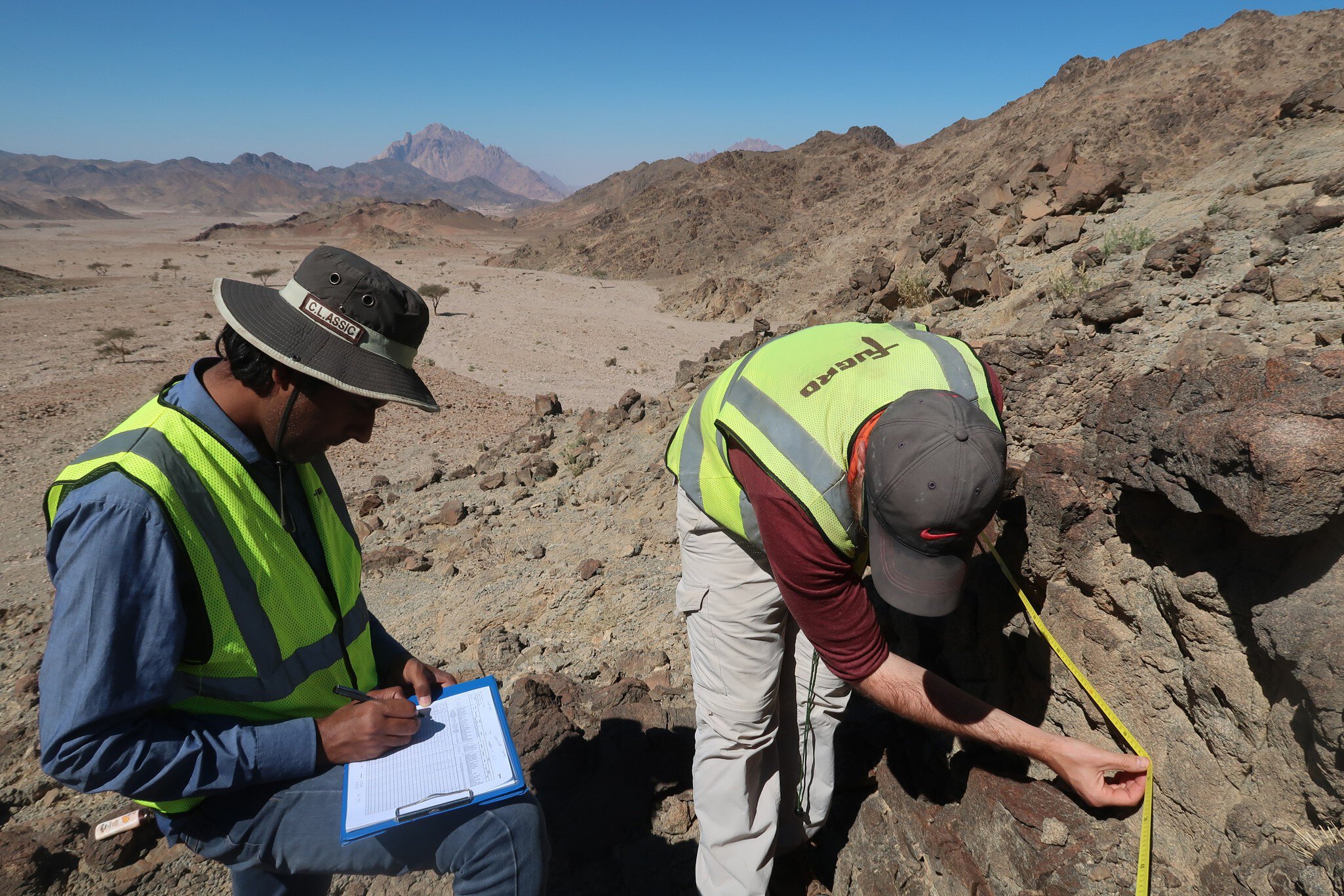
Field geological survey during prospecting
2. Exploration

Exploration activities
This stage determines the extent of the mineral deposit through drilling and core logging. Tonnage and grade calculations estimate deposit value. Feasibility studies categorize it as reserves (economically extractable now) or resources (potentially viable with future technology upgrades).
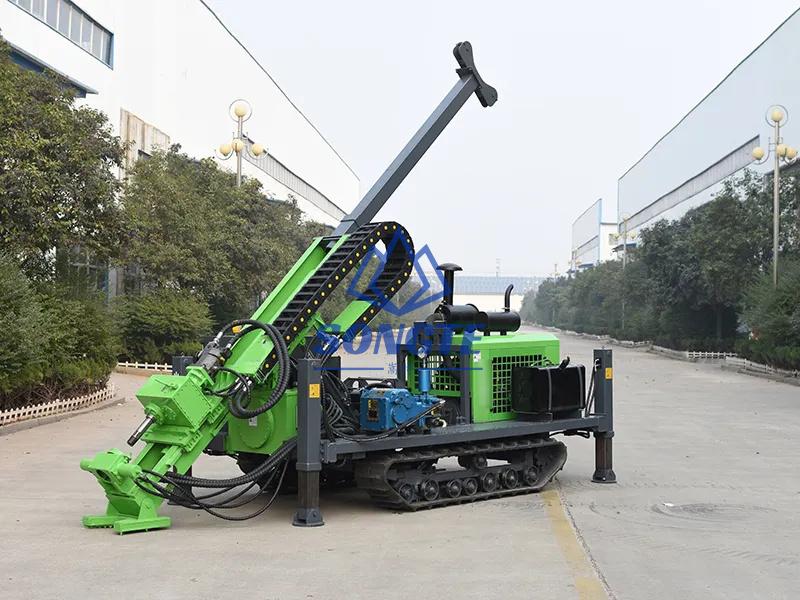
Mineral exploration core drilling rig
3. Development

Development phase
Depends on deposit depth:
- Near-surface: Strip overburden for surface mining.
- Deep deposits: Excavate shafts, declines, adits, inclines for underground mining.
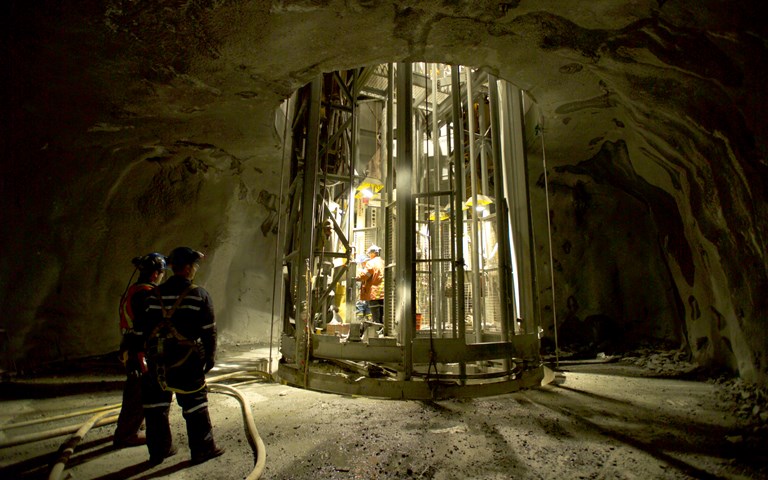
Underground shaft sinking during development
4. Exploitation (Production)

Mineral exploitation in progress
The prime stage begins once development ensures uninterrupted production (development continues alongside). Methods depend on deposit type, depth, extent, safety, technology, environment, and economics.
Broad classification:
- Surface Mining Methods
- Underground Mining Methods

Large-scale open pit exploitation
5. Reclamation

Reclamation and restoration
Reclamation is paramount for sustainability. Plans must be submitted before development begins. Activities include restoring land surface, planting vegetation, monitoring water quality over years. Old sites are often converted into national parks, golf courses, lakes, storage facilities, or waste disposal areas — benefiting society.

Tree planting and land restoration during reclamation
This is a cyclic process: Land is prospected, explored, mined, and reclaimed.
Also Read:
Mining is not just extraction — it's a responsible lifecycle from discovery to environmental restoration.


1 Comments
Industrial Air Conditioning Adelaide
Industrial Dust Extraction System
Fume Extraction System
Dust Extraction Installation
Welding Air Filtration Systems
Underground Mining Ventilation Systems