
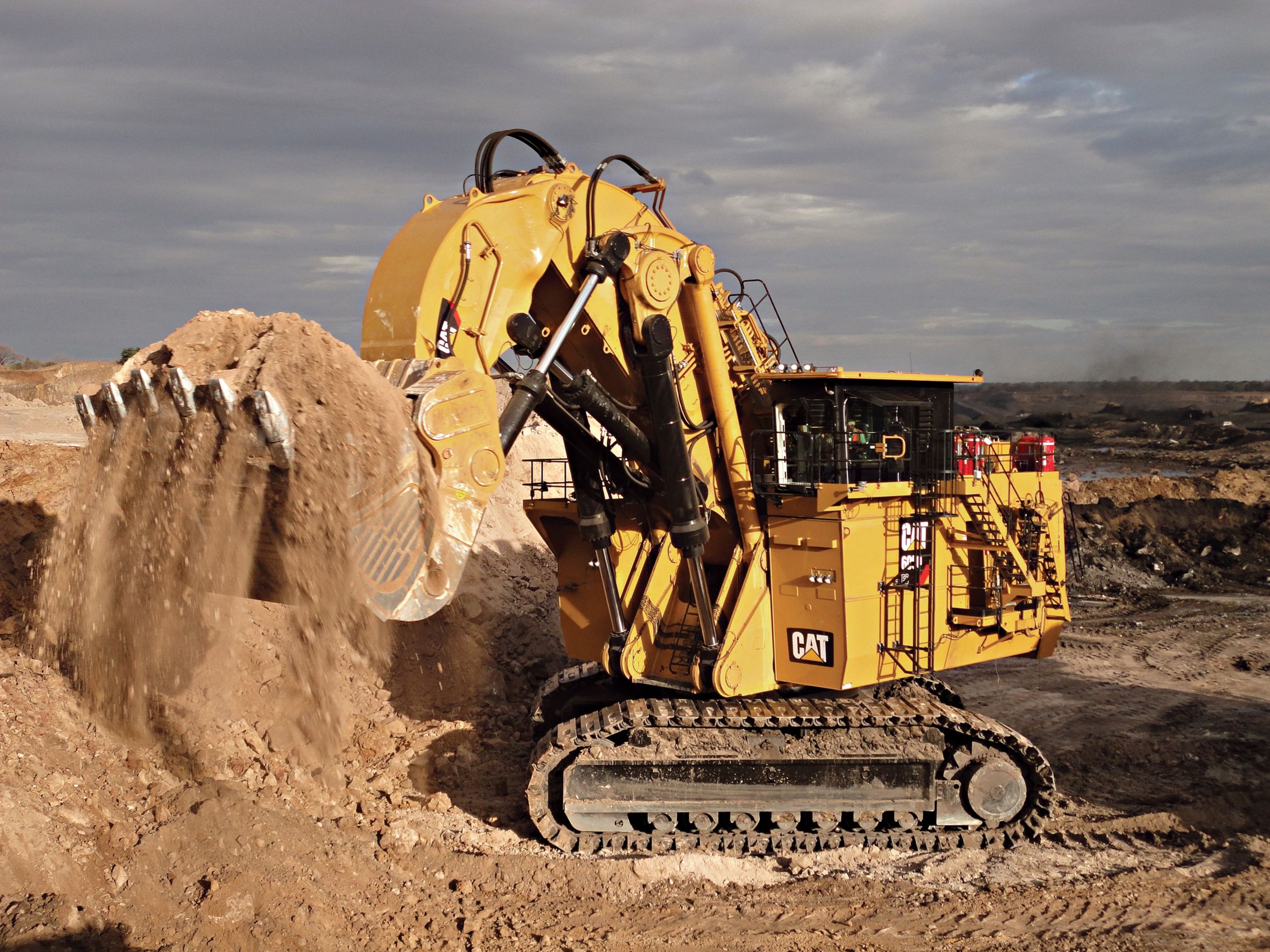
Caterpillar 6090 FS – The World's Largest Hydraulic Mining Excavator in Action (2026)
Top 10 Largest Excavators for Mining in 2026 – Ultimate Comparison Guide
In the demanding world of mining, the largest excavators for mining remain critical for high-volume overburden removal and ore extraction. As we progress through 2026, ultra-class hydraulic mining shovels continue to dominate open-pit operations worldwide, offering unmatched productivity, durability, and efficiency. This detailed comparison guide ranks the top 10 largest mining excavators in 2026 by operating weight, featuring key specifications, real-world applications, productivity formulas with examples, common pitfalls, safety tips, and more. Ideal for mining engineers, fleet managers, and industry professionals seeking data-driven insights.
Why Large Mining Excavators Matter in 2026
Large-scale mining demands machines capable of loading 200–400 tonne haul trucks in minimal passes while minimizing downtime and fuel costs. The largest excavators for mining boost output by 20–40% compared to smaller classes, support electrification trends for lower emissions, and handle extreme conditions in Australia, Chile, Canada, Russia, and emerging African/Asian sites. With global mineral demand rising, these giants drive cost-per-tonne reductions and align with ESG goals through hybrid/electric options and advanced telematics.
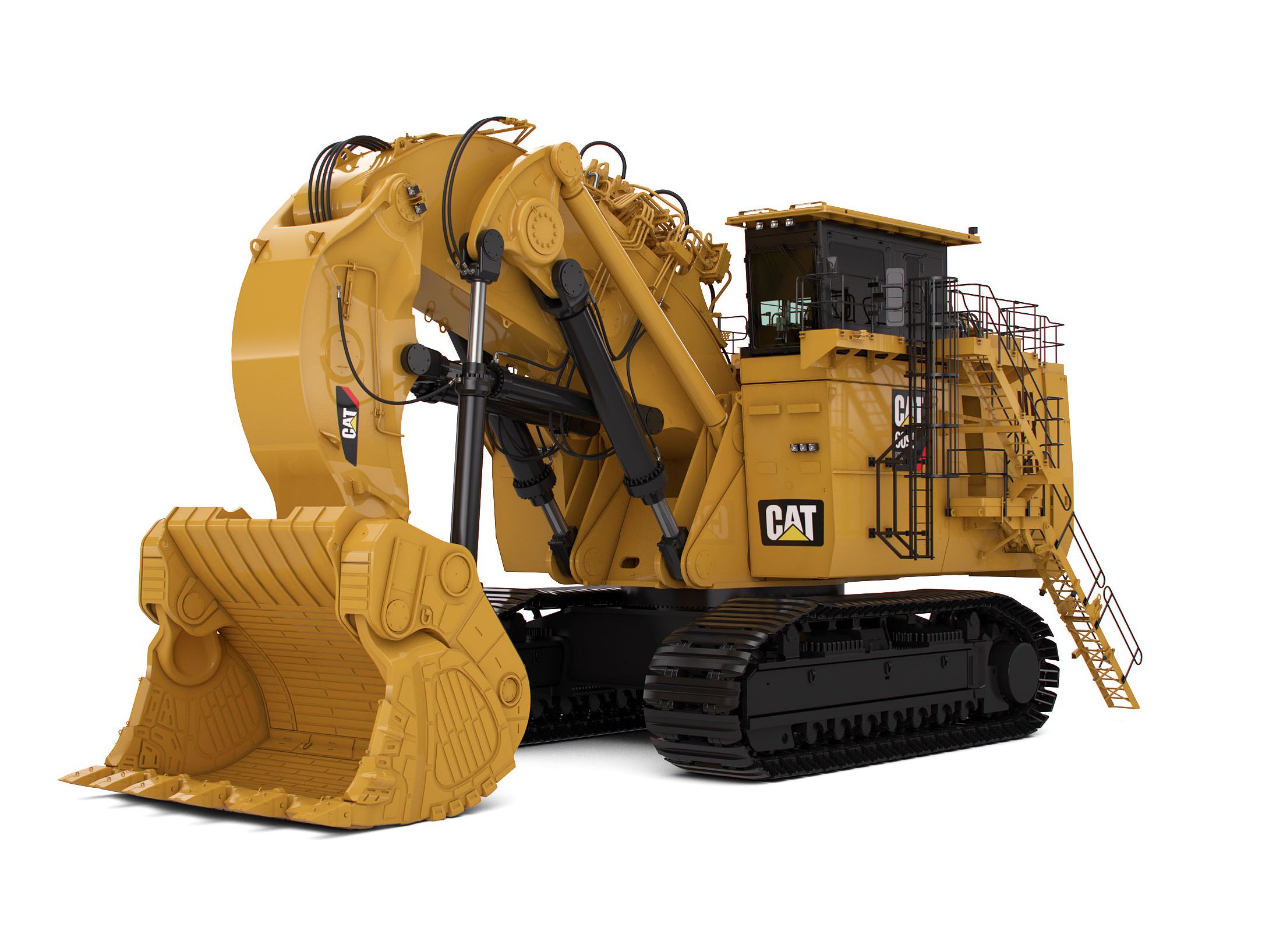
Ultra-Class Mining Excavator – Massive Scale & Power
Key Technical Features of Ultra-Class Mining Excavators
Ultra-class mining excavators (typically >500 tonnes) feature:
- Operating weight: Provides stability for massive payloads.
- Bucket capacity: 25–55+ m³ for high-volume cycles.
- Engine power: Dual diesel or electric drives, often 2000–4500 hp.
- Hydraulics: High-pressure systems for fast cycle times (25–40 seconds).
- Configurations: Front shovel (FS) for digging/loading, backhoe for selective work.
Modern 2026 models incorporate AI-assisted controls, predictive maintenance, and lower-emission engines.
Top 10 Largest Excavators for Mining in 2026 – Ranked by Operating Weight
- Caterpillar 6090 FS – ~1000 tonnes
Flagship ultra-class shovel with up to 52 m³ bucket, 3360 kW (4500 hp) twin Cummins engines. Loads 300+ tonne trucks in 3–4 passes. Dominant in oil sands and iron ore. - Bucyrus RH400 (now Cat) – ~980 tonnes
Legendary model with 50 m³+ bucket. Still active in Canadian oil sands and South American copper mines. - Hitachi EX8000-7 – ~837–911 tonnes
Dual-engine power (~2980–3870 hp), buckets up to 45 m³. Excellent in coal and iron ore with fuel-efficient hydraulics. - Liebherr R 9800 – ~810 tonnes
Bucket up to 47.5 m³, ~3000–4000 hp. Modular design for fast repairs; popular in gold/copper operations. - Komatsu PC8000-11 – ~773–800 tonnes
42 m³ bucket, ~3000 hp. AI features reduce cycle times in bauxite and coal mines. - XCMG XE7000 / similar ultra-class – ~672–900 tonnes range
Electric-drive options; cost-effective for Asian coal and emerging markets. - Liebherr R 996 B – ~676 tonnes
Versatile 36 m³ bucket; proven in platinum and mixed operations. - Komatsu PC5500-11 – ~553–700 tonnes
Reliable for mid-to-large open pits with enhanced safety tech. - Hitachi EX5600-7 – ~567 tonnes
Fuel-efficient for iron ore in India and similar regions. - Caterpillar 6060 / similar – ~570 tonnes
Precision-focused with hybrid potential for phosphate/minerals.
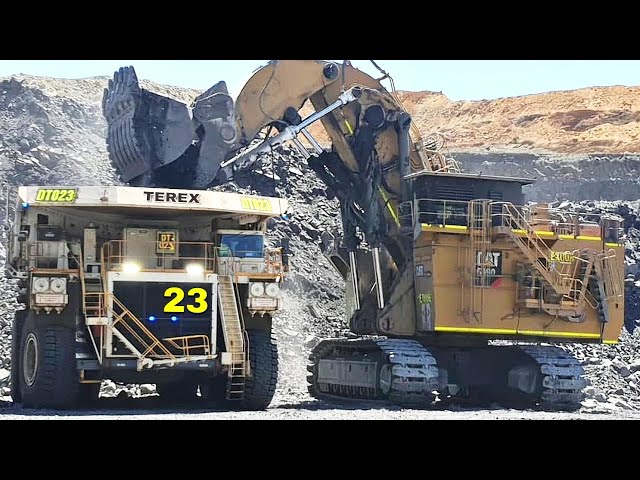
Side-by-side giants: Caterpillar 6090 FS & Terex RH400 in mining operation
Productivity Calculation for Large Mining Excavators
Use this formula to estimate hourly output:
Production (tonnes/hour) = [Bucket Capacity (m³) × Fill Factor × Material Density (t/m³) × 3600] / Cycle Time (seconds)
Step-by-Step Example: Cat 6090 FS in Coal Mining
- Bucket capacity: 52 m³
- Fill factor: 0.90 (loose coal)
- Material density: 1.6 t/m³
- Cycle time: 35 seconds (dig-swing-dump-return)
- Effective volume per pass: 52 × 0.90 = 46.8 m³
- Tonnes per pass: 46.8 × 1.6 = 74.88 tonnes
- Cycles/hour: 3600 / 35 ≈ 102.86
- Hourly production: 74.88 × 102.86 ≈ 7700 tonnes/hour
This output supports multi-million-tonne annual targets in large open-pit mines.
Real-World Field Example: Open-Cast Coal Mine in Australia
In Queensland's Bowen Basin, fleets of Hitachi EX8000-7 and Cat 6090 FS excavators remove overburden to access 10–20 m deep coal seams. A single EX8000-7 loads 240-tonne trucks in ~4 passes, achieving 5–8 million tonnes annually per unit. Operators use GPS-guided digging for precision, reducing dilution and improving coal quality. In contrast, underground-adapted smaller Liebherr models handle selective extraction in confined South African gold mines.
Common Mistakes When Operating Large Mining Excavators
- Overloading buckets → hydraulic strain and reduced lifespan.
- Poor undercarriage maintenance → accelerated track wear in abrasive conditions.
- Ignoring cycle optimization → higher fuel burn and lower tonnes/hour.
- Skipping telematics data review → missed early fault detection.
- Mismatching machine to material/terrain → inefficiency or safety risks.
Performance & Safety Improvement Tips for 2026
- Implement operator training simulators for cycle efficiency.
- Adopt predictive maintenance via IoT sensors.
- Use automation (semi-autonomous swing/dig) to reduce fatigue.
- Install proximity detection and collision avoidance systems.
- Monitor KPIs like fuel/tonne and availability (>90% target).
FAQ – Largest Excavators for Mining 2026
What is the largest excavator for mining in 2026?
The Caterpillar 6090 FS (~1000 tonnes) remains the largest hydraulic mining shovel.
Which is better: diesel or electric large mining excavators?
Electric variants cut emissions and OPEX but need grid infrastructure; diesel offers flexibility.
How much does a top mining excavator cost?
Ultra-class models range $15–40+ million depending on configuration and attachments.
Are these excavators suitable for underground mining?
Primarily open-pit; smaller adapted versions work underground.
What drives productivity in large excavators?
Bucket fill, short cycles, operator skill, and machine-material match.
Conclusion: Choosing the Right Giant for Your Mine
The top 10 largest excavators for mining in 2026 represent peak engineering, balancing raw power with smarter tech for sustainable, high-output operations. Whether prioritizing the Cat 6090 FS for ultimate scale or Liebherr/Komatsu models for versatility, the right choice lowers cost-per-tonne and boosts safety. Stay updated on electrification and autonomy trends to future-proof your fleet in this dynamic industry.


0 Comments