Posts

Showing posts with the label mine surveying

Errors and adjustments

Image
Errors and adjustments:  In mine surveying, errors can occur due to various factors such as instrument inaccuracies, human errors, environmental conditions, and the complexity of underground mining environments. These errors can lead to incorrect measurements and subsequently impact the overall accuracy of surveying data. Adjustments are made to correct these errors and ensure reliable and precise surveying results. Here are some common errors and adjustments in mine surveying: 1. Instrument Errors: Surveying instruments like theodolites, total stations, and levels can have inherent errors in their measurements. Calibration and regular maintenance of these instruments are necessary to minimize such errors. Adjustment is made by applying correction factors based on calibration data to compensate for instrument errors. 2. Atmospheric Conditions: Changes in atmospheric conditions such as temperature, humidity, and pressure can affect the accuracy of distance measurements. ...

EDM

Image
EDM: EDM, or Electronic Distance Measurement, is a technique used in surveying to measure distances between points using electromagnetic waves. It is commonly employed in various fields, including mine surveying. In mine surveying, EDM plays a crucial role in accurately determining distances and creating detailed maps of underground mines. Here are some key points about the application of EDM in mine surveying: 1. Distance Measurement: EDM instruments use electromagnetic waves, typically in the form of laser beams or infrared signals, to measure distances between two points. These instruments provide highly accurate measurements, allowing mine surveyors to determine the precise distances within a mine. 2. Mapping and Layout: Mine surveyors use EDM to create detailed maps and layouts of underground mines. By measuring distances between various points within the mine, they can accurately represent the mine's infrastructure, including tunnels, shafts, chambers, and other...

GPS

Image
GPS : GPS stands for Global Positioning System. It is a satellite-based navigation system that provides location and time information anywhere on or near the Earth's surface. The GPS system consists of a network of satellites in orbit around the Earth, ground-based control stations, and GPS receivers that can be found in various devices such as smartphones, car navigation systems, and handheld GPS units. The GPS system works by using trilateration, which is the process of determining the position of an object by measuring the distances to known points. The GPS satellites transmit signals that are received by GPS receivers on the ground. By measuring the time it takes for the signals to travel from the satellites to the receiver, the GPS receiver can calculate the distance to each satellite. With signals from multiple satellites, the GPS receiver can then determine its precise location by intersecting the distances from the satellites. GPS technology has numerous appli...

basics of GIS (Geographic Information System) and remote sensing

Image
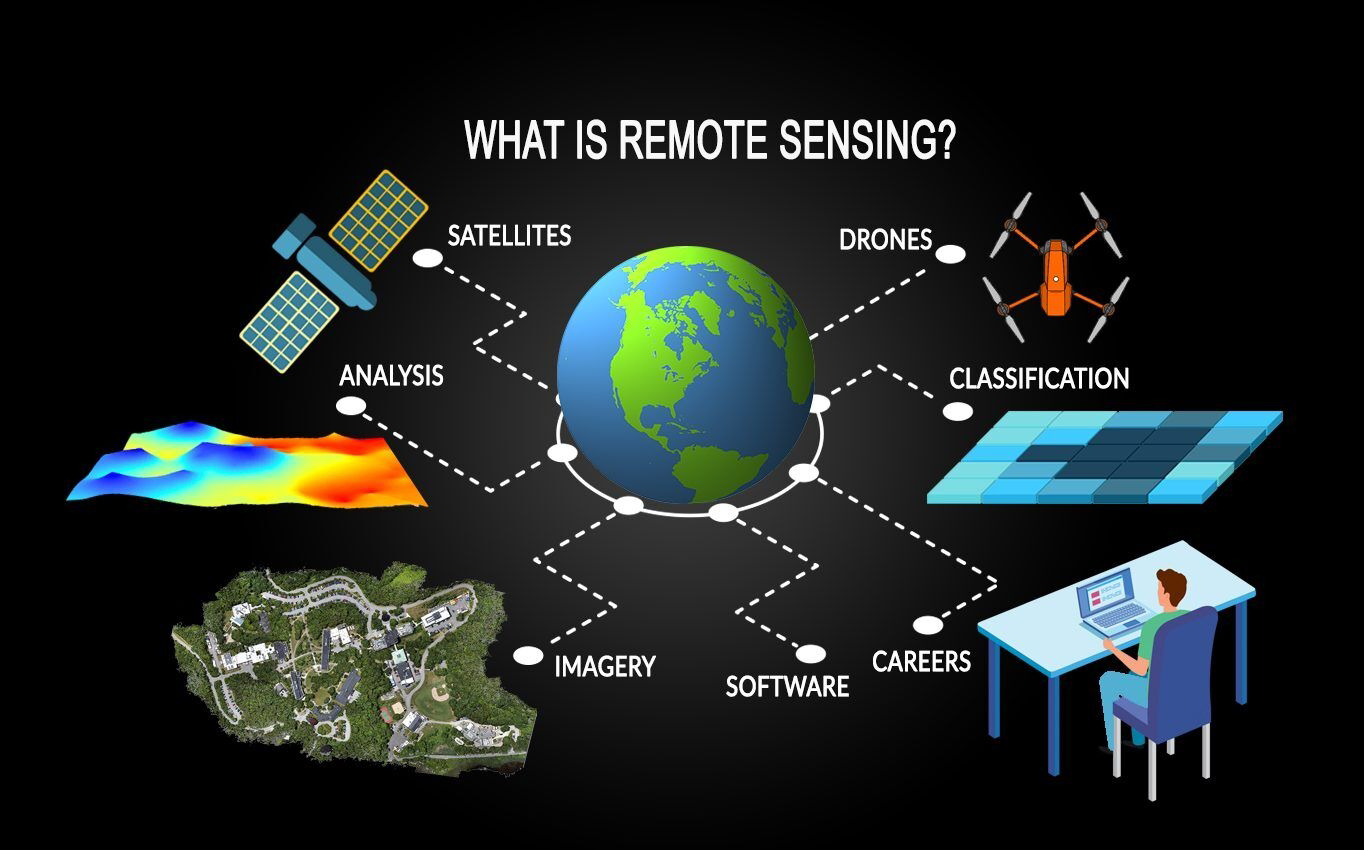
Basics of GIS (Geographic Information System) and remote sensing : GIS (Geographic Information System) and remote sensing are two interrelated technologies used for gathering, analyzing, and visualizing spatial data. While they have distinct applications, they often complement each other in various fields such as environmental monitoring, urban planning, agriculture, disaster management, and more. Here's a brief overview of GIS and remote sensing: 1. GIS (Geographic Information System):    - GIS is a framework for capturing, storing, manipulating, analyzing, and presenting geospatial data.    - It combines data from different sources, such as maps, satellite imagery, surveys, and sensor networks, to create a comprehensive representation of the Earth's surface.    - GIS uses spatial and attribute data to perform various operations like spatial analysis, data query, mapping, and decision-making.    - It enables users to visualize data ...

underground surveying technique

Image
Underground surveying technique : Underground surveying is a branch of surveying that deals with the measurement and mapping of features beneath the Earth's surface. It involves the use of specialized techniques and equipment to gather data about subsurface conditions and create accurate maps of underground spaces. Here are some key aspects of underground surveying: 1. Purpose: Underground surveying is performed for various purposes, including:    - Planning and designing underground infrastructure such as tunnels, mines, and utility systems.    - Mapping geological features, such as rock formations, faults, and groundwater resources.    - Assessing the stability and safety of underground structures.    - Locating and mapping underground utilities, such as pipelines and cables. 2. Techniques: Several techniques are employed in underground surveying, depending on the specific requirements and conditions. These techniques may include: ...

Tacheometry basics

Image
Tacheometry basics:  Tacheometry is a method used in surveying and civil engineering to determine distances, elevations, and relative positions of points on the Earth's surface. It is a rapid and efficient technique that allows for the collection of measurements without requiring a direct line of sight between the surveying instrument and the target point. In tacheometry, a theodolite or total station is used to measure horizontal and vertical angles between the instrument and the target point. Additionally, a staff or stadia rod is used as a reference object at the target point. The staff is marked with graduations or stadia lines that are visible through the surveying instrument. By measuring the apparent height or subtense of the staff on the stadia lines or graduations, and knowing the distance between the instrument and the staff, the distance from the instrument to the target point can be calculated using trigonometric principles. The vertical angle ...

Theodolite basics

Image
Theodolite basics: A theodolite is a precision optical instrument used for measuring angles in horizontal and vertical planes. It is commonly used in surveying, engineering, and construction to determine the exact angles and directions between different points on the ground or other surfaces. Theodolites consist of a telescope mounted on a rotating base that can be turned horizontally (azimuth) and vertically (elevation). They also have graduated circles or scales for measuring angles in both planes. The telescope can be adjusted for focus and also features crosshairs or other reticles to aid in aiming and measuring. To use a theodolite, it is set up on a tripod or other stable base, and its orientation is aligned with a reference point or direction. The operator then looks through the telescope and uses the graduated circles to measure the horizontal (azimuth) and vertical (elevation) angles to specific targets or points of interest. These angle measurements can be used ...

Mine Levelling Techniques

Image
Mine Levelling Techniques: Mine surveying plays a crucial role in the mining industry by providing accurate measurements and data that are essential for safe and efficient mining operations. Levels and leveling are important techniques used in mine surveying to determine elevations and create level surfaces within the mine site. Let's delve into levels and leveling in the context of mine surveying. 1. Levels:  Levels are instruments used to measure vertical distances or elevations. They consist of a telescope mounted on a tripod, with a leveling mechanism that allows the instrument to be set up precisely. Some commonly used levels in mine surveying include dumpy levels, automatic levels, and digital levels. 2. Levelling: Levelling is the process of determining the relative heights or elevations of different points on the ground. It involves the use of a level instrument and a leveling staff.  Levelling can be done using two methods:   differential leveling a...